

The reign of Fontem Defang, ruler of Lebang in Fontem Subdivision of Lebialem Division, is remembered not only for political stability but for an enduring commitment to education as a tool of liberation and development. More than a policy priority, education became a royal mission, pursued with patience, personal sacrifice, and long-term vision.
When Fontem Defang ascended the throne in 1951, formal education in Lebialem was still in a rudimentary state. The few existing institutions were Native Authority (NA) primary schools, characterized by limited resources, irregular attendance, and widespread skepticism among the population. This skepticism was not accidental; it was shaped by earlier colonial experiences, including the collapse of the Native Authority School in Lebialem in 1922, which left lasting mistrust toward formal education.
Despite this historical burden, Fontem Defang recognized that the future of his people depended on knowledge, literacy, and exposure beyond the confines of the fondom. He believed that education was not an alien imposition but a necessary adaptation—one that could coexist with tradition while opening doors to opportunity.
Throughout the 1950s and early 1960s, he used his authority as ruler of Lebang–Fontem to encourage school enrollment, persuade hesitant parents, and legitimize formal education within the cultural framework of Lebialem. His leadership was not coercive; rather, it relied on persuasion, example, and moral authority. By consistently associating education with dignity and progress, he gradually altered public perception.
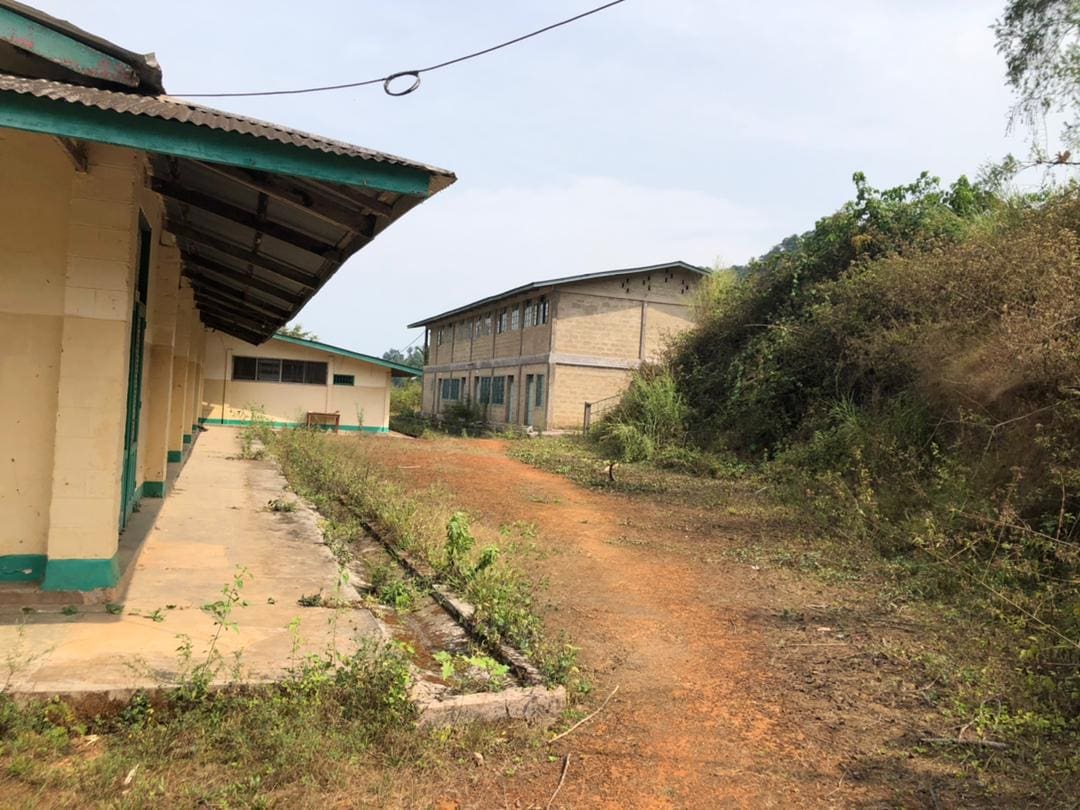
This vision reached its most significant milestone in September 1966 with the establishment of Our Lady Seat of Wisdom College in Lebialem. Commonly referred to as the Seat of Wisdom, the school marked the transition from basic primary education to post-primary and secondary education within the division. Its founding represented a historic breakthrough, positioning Lebialem within Cameroon’s expanding educational landscape.
Fontem Defang played a pivotal role in this achievement. He actively lobbied educational and religious authorities, provided moral and logistical support, and used his influence to mobilize community acceptance. The school initially opened with about 42 students, most of them from Lebialem, but its significance far exceeded its modest beginnings. It symbolized confidence in the intellectual capacity of Lebialem youth and faith in education as a pathway to self-determination.
Under his reign, education in Lebialem evolved from a marginal activity into a central pillar of community life. Primary schools multiplied, school attendance increased, and secondary education became an attainable goal for ordinary families. Fontem Defang’s insistence on education laid the groundwork for the later emergence of teachers, administrators, professionals, and leaders from Lebialem, many of whom would serve both locally and nationally.
By the time he stepped aside in 1982, the educational landscape of Lebialem had been fundamentally transformed. What began as fragile Native Authority schools had matured into a system capable of sustaining higher learning and producing generations of educated citizens. This transformation stands as one of Fontem Defang’s most enduring legacies.
Education, under his leadership, was not simply an instrument of modernization—it was a royal duty, carried out in service of both present and future generations.



💬 Comments