


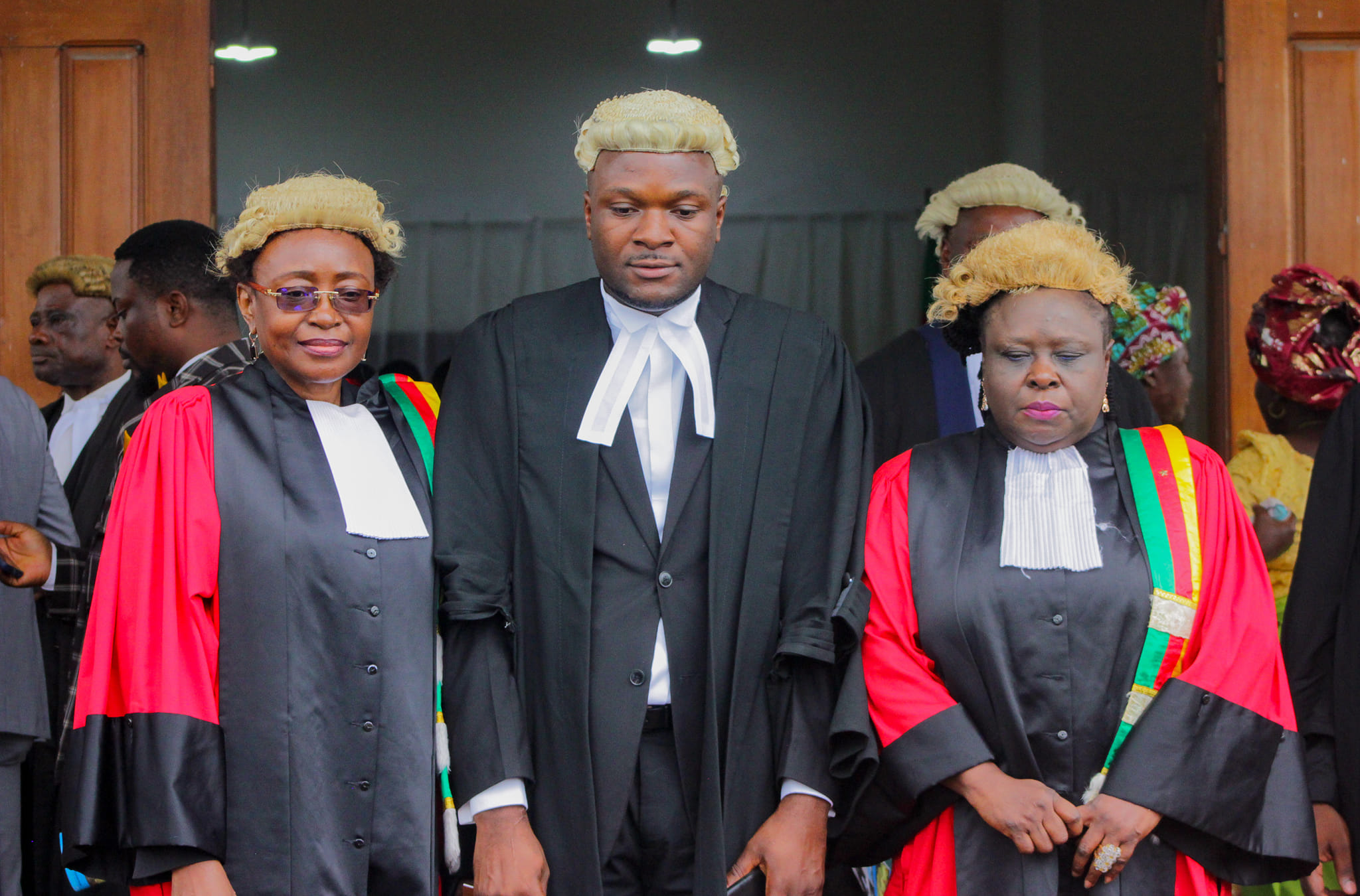
Yaoundé, Cameroon — A Cameroonian lawyer has initiated legal proceedings against President Paul Biya, accusing the Head of State of failing to implement Article 66 of the Constitution of Cameroon and neglecting to convene the country’s Higher Judicial Council.
The lawsuit, filed before the Fako High Court, was brought by Barrister Anyang Lewis Forchenallah, who argues that the prolonged non-implementation of constitutional provisions has undermined transparency, accountability, and the effective functioning of Cameroon’s judiciary.
Core of the Legal Challenge
At the heart of the case is Article 66, a constitutional provision adopted in 1996 that requires senior public officials — including the President, ministers, members of parliament, senior civil servants, and judicial officers — to declare their assets at the beginning and end of their time in office.
According to the plaintiff, nearly three decades after the constitutional amendment, the asset declaration requirement remains largely unenforced. He contends that this failure weakens anti-corruption efforts and erodes public confidence in governance.
In his court submission, Barrister Anyang maintains that constitutional provisions must be implemented fully and without selective delay, emphasizing that no public authority is exempt from compliance with the supreme law of the land.
Higher Judicial Council: A Dormant Institution?
Beyond Article 66, the suit also addresses the alleged failure to convene the Higher Judicial Council (HJC), the constitutional body responsible for:
Appointment and promotion of magistrates
Disciplinary measures within the judiciary
Oversight of judicial careers
Transfers and retirements of judges
The Council, chaired by the President of the Republic, plays a central role in maintaining judicial order and independence. However, reports indicate that it has not convened for several years.
The plaintiff argues that this inactivity has created administrative stagnation within the justice system. Vacant judicial positions, unresolved disciplinary complaints, and delayed promotions are among the consequences cited in the court filing.
Legal observers note that prolonged inactivity of the HJC could affect case backlogs and institutional efficiency across various courts in the country.
Broader Constitutional Implications
The case raises significant constitutional and institutional questions, including:
Whether the executive can be compelled by court order to implement dormant constitutional provisions
The extent of judicial authority in matters involving the presidency
The balance between executive discretion and constitutional obligation
If the court proceeds substantively with the matter, the outcome could have long-term implications for governance, judicial independence, and constitutional enforcement in Cameroon.
What Happens Next?
The Fako High Court is expected to determine the admissibility of the case and whether it has jurisdiction to issue binding orders in relation to the presidency.
Political analysts suggest the case may generate national debate about constitutional accountability and institutional reform, particularly as discussions around governance and transparency continue to shape public discourse.
At the time of publication, there has been no official response from the presidency regarding the lawsuit.
Atannex Perspective
While the courts will ultimately decide the legal merits of the case, the filing itself underscores growing scrutiny of constitutional implementation in Cameroon. Whether symbolic or transformative, the proceedings signal an evolving legal conversation about accountability at the highest levels of power.

💬 Comments